

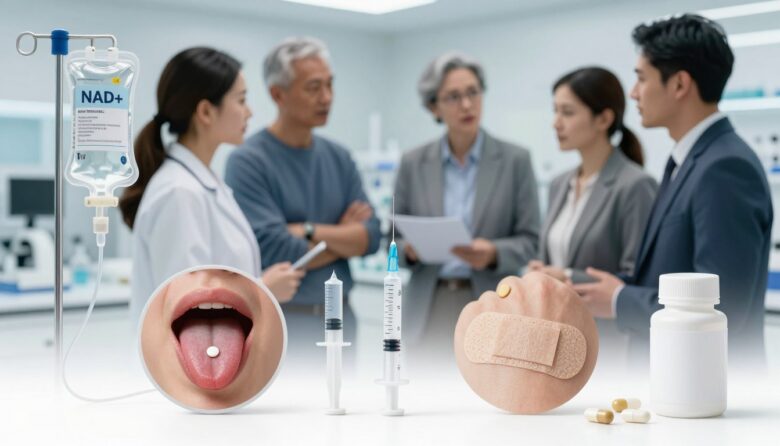
As men age, particularly those over 40, they experience a significant decline in NAD+ levels. This drop can adversely affect energy production, cognitive function, and even sexual health. Thus, choosing the right way to introduce NAD+ into the body becomes crucial.
In this article, we will explore various forms of NAD+ delivery, including IV infusion, sublingual delivery, subcutaneous injection, transdermal patches, and oral pills. Our goal is to help you understand which option might yield the best results for your health objectives.
Just like businesses select data ingestion strategies based on their needs, individuals must consider how quickly they want NAD+ in their systems. The key factors here are speed and compatibility with your unique physiology.
We will provide insights based on scientific data and professional expertise, particularly from Dr. John Spencer Ellis, who integrates NAD+ optimization into his wellness services. This journey toward optimal supplementation starts with understanding that the method of administration is as important as the molecule itself.
Key Takeaways
- Men over 40 face critical declines in NAD+ levels, impacting various health aspects.
- The choice of delivery method can significantly influence health outcomes.
- Speed of access and source compatibility are vital in selecting a method.
- Individual factors such as lifestyle and health status play a crucial role.
- Insights from professionals can guide informed decisions on NAD+ supplementation.
Understanding NAD+ and Its Role in Health and Vitality
With age, particularly after 40, men often find their vitality diminishing. This decline is not just a natural part of aging; it can be linked to reduced levels of NAD+ (nicotinamide adenine dinucleotide). This essential coenzyme plays a critical role in energy production and metabolic processing within our cells.
Much like how data ingestion serves as the primary layer in an organization’s data integration systems, NAD+ acts as a foundational element in cellular function. Without adequate NAD+ levels, our bodies struggle to process nutrients effectively, impacting overall energy and vitality.
Here are some key insights into the importance of NAD+:
- NAD+ is present in every living cell and is vital for over 500 enzymatic reactions that support energy metabolism, DNA repair, and cellular communication.
- Research shows that NAD+ levels can decline by about 50% between the ages of 40 and 60, correlating with decreased vitality and cognitive function.
- This coenzyme is crucial in the mitochondrial electron transport chain, facilitating the conversion of nutrients into ATP, the energy currency for bodily functions.
- The body integrates various sources of NAD+ precursors, such as tryptophan and nicotinic acid, into usable NAD+, similar to how data integration platforms compile information from multiple sources.
- Unlike fat or glycogen, NAD+ is not stored in large quantities; it is continuously synthesized and consumed, making the method of ingestion vital for accessibility.
- Different tissues have varying capacities for NAD+ uptake, meaning the route of administration can lead to significantly different outcomes.
- For men over 40, low NAD+ levels are linked to issues like reduced testosterone, slower recovery from exercise, brain fog, and diminished sexual stamina.
Understanding NAD+ at this foundational level is crucial. It prepares you to evaluate the different ingestion methods we will discuss later. Recognizing what NAD+ does and why its bioavailability matters will help you make a strategic choice between IV, sublingual, subcutaneous, transdermal, and pill forms.
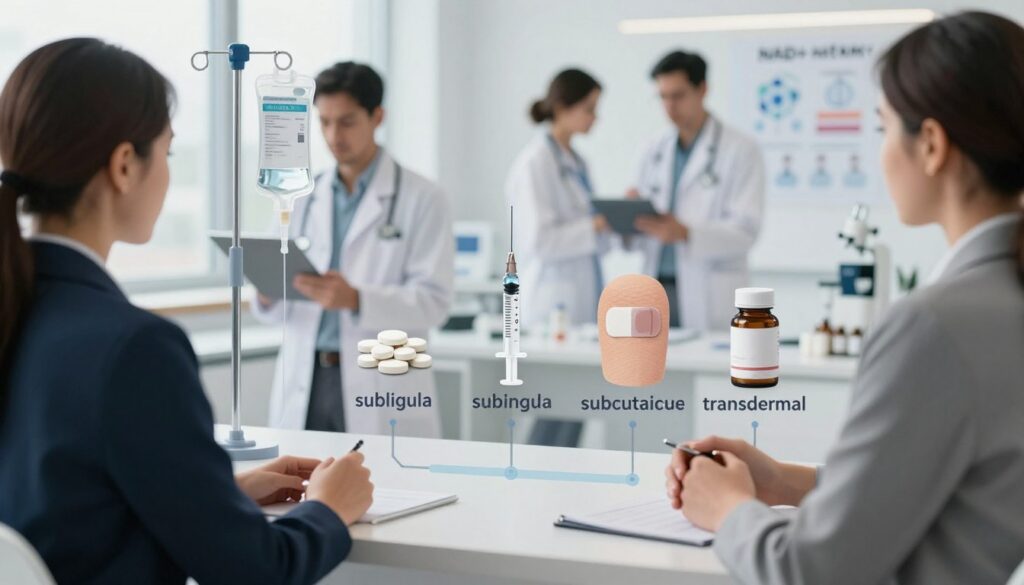
Common NAD+ Ingestion Methods: An Overview
The journey of aging brings various challenges, particularly in energy and vitality for men over 40. Understanding how to effectively introduce NAD+ into the body is essential. We will explore five common methods of NAD+ delivery, highlighting their unique features and benefits.
Intravenous (IV) NAD+ Administration
Intravenous (IV) NAD+ administration delivers NAD+ directly into the bloodstream. This method bypasses digestive barriers, achieving 100% bioavailability. It functions much like real-time streaming data ingestion, where information flows continuously and immediately to its target.
IV therapy typically involves a 2-4 hour infusion session in a clinical setting. During this time, NAD+ is slowly dripped into the vein, saturating tissues rapidly. This approach is ideal for those seeking immediate therapeutic effects, such as detoxification or rapid energy restoration.
Sublingual NAD+ Supplements
Sublingual NAD+ supplements offer a micro-batching approach. A small volume of liquid or a dissolvable tablet is placed under the tongue. Here, the rich network of capillaries absorbs NAD+ directly into the bloodstream, bypassing the digestive system.
This method provides a practical middle ground—faster than oral pills but less invasive than IV or injections. Absorption begins within 60-90 seconds, with peak plasma levels achieved in just 10-15 minutes.
Subcutaneous NAD+ Injections
Subcutaneous NAD+ injections involve administering NAD+ into the fatty tissue beneath the skin. This creates a depot effect, gradually releasing the molecule into circulation over several hours. It resembles near-real-time data ingestion with sustained processing capabilities.
Self-administration is possible after proper training, balancing high bioavailability with convenience. This method avoids the sharp peaks and troughs associated with IV delivery.
Transdermal NAD+ Delivery Systems
Transdermal NAD+ delivery systems utilize patches or creams that release NAD+ through the skin over an extended period. This hybrid approach combines continuous low-dose delivery with the convenience of a wearable format.
The transdermal route avoids first-pass metabolism entirely, providing steady-state NAD+ levels for 8-24 hours, depending on the formulation. However, the molecular size of NAD+ presents challenges for skin penetration, which manufacturers address through various enhancement technologies.
Oral Pill Form of NAD+
The oral pill form of NAD+ represents the traditional batch processing model. A dose is swallowed, entering the digestive system, where it undergoes processing before reaching systemic circulation.
Oral NAD+ precursors like nicotinamide riboside (NR) and nicotinamide mononucleotide (NMN) are popular because they are more stable in the digestive tract. However, conversion efficiency varies significantly among individuals based on gut health and enzyme activity.
Each of these five methods occupies a distinct position on the spectrum of speed, convenience, cost, and bioavailability. Understanding their fundamental mechanisms is essential before we delve deeper into a detailed comparison in the next section.
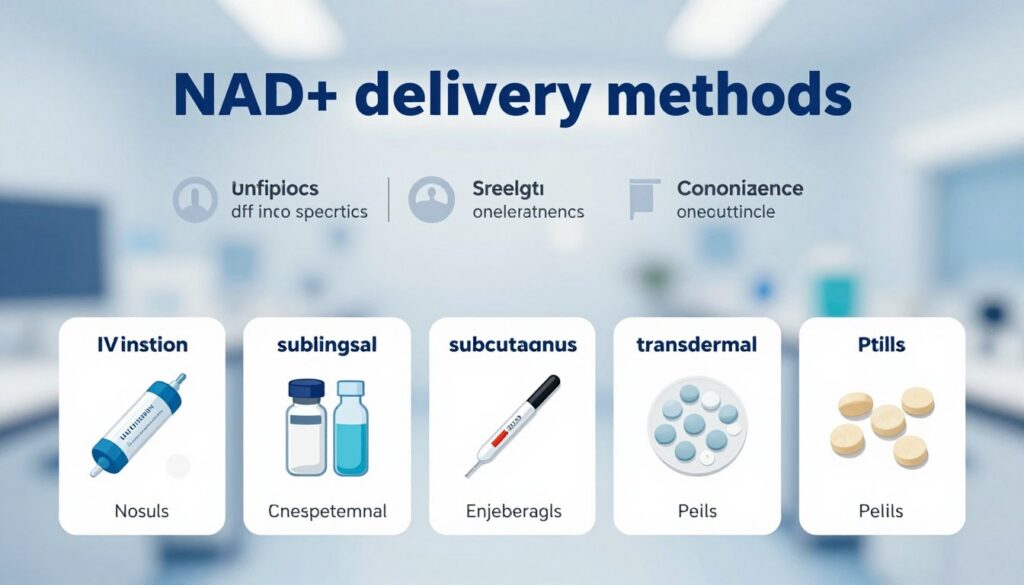
Compare NAD Ingestion Methods: Bioavailability, Speed, and Effectiveness
As we navigate the complexities of health, understanding the various approaches to enhancing NAD+ levels is vital. Each method of delivery presents unique benefits and drawbacks, making it essential to evaluate them carefully.
Dr. John Spencer Ellis often assesses these options with clients, considering their individual health data and goals. This personalized approach ensures that the chosen method aligns with specific health needs.
When comparing these delivery systems, we can draw parallels to data ingestion processes. For instance, batch ingestion is straightforward and cost-effective but comes with higher latency, meaning you wait longer for results. In contrast, real-time streaming ingestion offers immediate access but requires a more sophisticated setup.
Similarly, when evaluating NAD+ delivery methods:
- IV administration achieves nearly 100% bioavailability, with effects felt within 15-30 minutes. However, it necessitates clinical visits and can cost between $250-$1000 per session.
- Oral pills and precursors show a bioavailability of 5-15%. They are more affordable but take 60-180 minutes to show effects, making them the batch processing option.
- Sublingual delivery offers a middle ground, with bioavailability of 30-50% and onset within 10-20 minutes, representing a micro-batching approach.
- Subcutaneous injections provide 70-90% bioavailability, with a gradual onset over 30-60 minutes, allowing for at-home administration after training.
- Transdermal patches have variable bioavailability (20-40%) and the longest duration of effect, making them a hybrid system that prioritizes steady-state maintenance.
In evaluating these methods, we also consider the practical aspects. Compliance rates can drop with options requiring clinical visits, while daily pill fatigue may impact consistency in oral supplementation. This mirrors how organizations assess not just technical specifications but also practical adoption when selecting data ingestion tools.
Ultimately, the speed of onset matters differently based on individual goals. For immediate cognitive enhancement, sublingual or IV methods may be preferred. Conversely, those focused on long-term cellular repair might lean towards transdermal or subcutaneous options.
In conclusion, the comparison of these delivery systems is not about finding a single “best” method. Instead, it’s about matching individual health priorities with the unique pharmacokinetic profiles of each approach.
Factors to Consider When Choosing the Best NAD+ Administration Method
Navigating the options for enhancing your health can feel overwhelming, especially when considering how to effectively boost your NAD+ levels. Making the right choice involves a thorough evaluation of your personal health goals and circumstances. Just as businesses analyze their data ingestion strategies, you should consider various factors to ensure the best outcomes.
We guide readers through a systematic evaluation of their personal health goals. It’s important to distinguish between those seeking acute therapeutic intervention—such as post-detox recovery or neurological support—and those pursuing long-term healthy aging and vitality maintenance. These different use cases demand distinct approaches.
The factor of time sensitivity is critical. If you need rapid cognitive clarity before an important business presentation or enhanced physical performance for an athletic event, methods with faster onset like IV or sublingual become more valuable than slower-release options like transdermal patches.
We address the practical reality of cost. While IV NAD+ delivers the highest bioavailability, the cumulative expense of regular sessions can reach $500-$1000 monthly. In contrast, oral precursors may cost $50-$150 monthly but require adjusting for their lower absorption efficiency. This is similar to how businesses evaluate the total cost of ownership for data ingestion platforms.
Lifestyle compatibility often determines long-term adherence. A busy executive traveling frequently may find sublingual tablets or transdermal patches far more sustainable than scheduling weekly IV appointments. Meanwhile, someone with a flexible schedule and access to a quality clinic may prefer the ritual and immediate effects of intravenous administration.
We also discuss the importance of your current health status. Factors such as kidney and liver function, cardiovascular health, and any existing medical conditions directly impact how your body processes and eliminates NAD+ and its metabolites. This is akin to how source system compatibility determines which data ingestion tools will work effectively.
The volume of NAD+ required varies dramatically between individuals. Someone recovering from significant cellular stress or addiction may benefit from the high-dose capacity of IV delivery (500-1000mg per session). In contrast, someone maintaining general wellness may achieve excellent results with lower daily doses via sublingual or oral routes.
We highlight the role of personal comfort with different administration methods. Factors like needle phobia, digestive sensitivity, skin reactivity, and time availability all influence which approach you will consistently use. Consistency is the single most important factor in achieving meaningful results from NAD+ supplementation.
Finally, we encourage readers to view this decision as an iterative process rather than a permanent choice. Many individuals use different methods in combination—perhaps monthly IV sessions supplemented by daily sublingual maintenance. This hybrid approach mirrors how sophisticated organizations combine batch and streaming data ingestion for comprehensive coverage.
Potential Risks, Side Effects, and Safety Profiles of Different NAD+ Forms
Understanding the potential risks and side effects associated with different forms of NAD+ is crucial for informed decision-making. Each delivery system has its unique safety profile, and being aware of these can help you make the best choice for your health.
Just as organizations face challenges in data ingestion, such as security vulnerabilities and data quality issues, individuals using NAD+ should also consider potential risks. Here’s a breakdown of what to expect from each method:
| NAD+ Delivery Method | Potential Risks and Side Effects |
|---|---|
| IV Administration | Infusion-site discomfort, transient warming sensation, nausea during rapid infusion, rare cases of phlebitis or infection. |
| Oral Supplements | Mild to moderate gastrointestinal disturbances, including stomach cramping, diarrhea, and nausea; effects often diminish after 1-2 weeks. |
| Sublingual Delivery | Lower systemic side effects, but possible mild oral mucosa irritation, temporary tingling sensation, or unpleasant taste. |
| Subcutaneous Injections | Injection-site reactions like redness, swelling, tenderness; requires sterile technique to avoid infections. |
| Transdermal Patches | Lowest invasive risk, but may cause contact dermatitis, itching, or rash at the application site. |
We address the critical issue of data quality in safety reporting. Long-term safety data for high-dose NAD+ administration, especially via IV and injection routes, remains limited. Most insights come from short-term studies rather than multi-year research.
The body’s regulatory systems for NAD+ metabolism mean that excessive supplementation could disrupt natural feedback loops. Therefore, we discuss the importance of cycling protocols and regular monitoring of biomarkers. This ensures that supplementation supports cellular processing capacity without overwhelming it.
Individuals with certain medical conditions—such as active cancer, severe liver disease, or uncontrolled hypertension—should exercise caution and seek professional guidance before starting any NAD+ regimen. This principle is a cornerstone of Dr. John Spencer Ellis’s consulting practice.
In conclusion, understanding the risks associated with NAD+ supplementation is not a reason to avoid it. Instead, it should inform your method selection and dosing strategy. When appropriate protocols are followed, NAD+ supplementation across all delivery methods generally demonstrates a favorable safety profile.
The Importance of Professional Consultation: Dr. John Spencer Ellis and NAD+ Guidance
When it comes to enhancing health, professional guidance can make a significant difference. Just as organizations benefit from data integration platforms that streamline processes, individuals can gain from expert insights when navigating the complexities of NAD+ supplementation.
Dr. John Spencer Ellis stands out as a leading figure in holistic men’s health optimization. His comprehensive approach integrates NAD+ consulting into a broader framework that addresses fitness, nutrition, hormone balance, and cognitive performance for men over 40.
Dr. Ellis’s consulting process begins with a thorough assessment of each client’s health data. This includes blood work, lifestyle factors, symptom profiles, and specific wellness goals. By creating a personalized data integration approach, he ensures that the chosen NAD+ method aligns with the individual’s unique biological systems.
Rather than simply recommending a single ingestion method, Dr. Ellis educates clients on the pharmacokinetic profiles of each option. He helps them understand how IV, sublingual, subcutaneous, transdermal, and oral forms interact with their specific health status and objectives.
His consulting services address practical challenges that many men face in the supplement marketplace. With conflicting marketing claims, variable product quality, and the absence of standardized dosing guidelines, Dr. Ellis provides clarity akin to a well-designed data ingestion framework in an organization.
Monitoring and adjustment are also key components of his approach. Dr. Ellis teaches clients how to track their responses to NAD+ supplementation through subjective measures—like energy levels and mental clarity—as well as objective biomarkers. This ongoing data collection allows for protocol adjustments that enhance effectiveness.
Furthermore, Dr. Ellis recognizes that NAD+ optimization does not occur in isolation. It must be integrated with sleep quality, stress management, nutritional support, and physical activity to produce meaningful, sustainable results.
While this article provides comprehensive information to support informed decision-making, the complexity of individual biochemistry means that professional guidance can significantly accelerate results. It can also reduce the trial-and-error period that many self-guided individuals experience.
In summary, Dr. Ellis’s NAD+ consulting serves as a valuable resource for men who are serious about optimizing their health. By moving beyond generic recommendations, they can access a truly personalized protocol that accounts for their complete health picture.
Patient Use Cases: Tailoring NAD+ Form to Lifestyle and Health Goals
Entering the 40s can be a pivotal time for men, often leading to shifts in energy levels and overall well-being. Understanding how to effectively enhance NAD+ levels is crucial. Here, we present various patient use cases that illustrate how different forms of NAD+ supplementation can be tailored to individual lifestyles and health goals.
Just as businesses analyze their data ingestion strategies, we can assess how specific use cases align with the needs of individuals:
- Mark’s Journey: A 52-year-old executive traveling 3-4 days a week needs reliable cognitive sharpness for boardroom presentations. His use case favors sublingual NAD+ tablets for rapid onset before meetings, combined with a transdermal patch on travel days to maintain steady levels without the logistical complexity of IV scheduling.
- Robert’s Recovery: At 47, Robert is recovering from alcohol dependency and seeks neurological restoration. High-dose IV NAD+ administered in a clinical setting provides the intensive, real-time intervention needed for neurotransmitter rebalancing and cellular repair—a protocol that Dr. John Spencer Ellis has guided numerous clients through successfully.
- David’s Longevity Focus: A 58-year-old with a disciplined daily routine, David prioritizes longevity and healthy aging. His use case aligns perfectly with oral NMN or NR supplements taken each morning, representing a batch ingestion approach that supports long-term cellular maintenance without the higher costs of clinical methods.
- James the Fitness Enthusiast: At 44, James is training for a master’s division competition. He demonstrates a hybrid use case, using subcutaneous NAD+ injections three times weekly for sustained recovery support, supplemented by sublingual doses immediately before training sessions for acute performance enhancement.
- Michael’s Cognitive Health: A 62-year-old managing early-stage cognitive decline, Michael’s use case demands the highest possible brain NAD+ levels. Regular IV infusions combined with daily sublingual maintenance are the most appropriate approach despite the higher investment—because the stakes justify the more intensive protocol.
- Thomas’s Practical Approach: At 49, Thomas balances a demanding job and three children. He opts for a once-daily oral precursor supplement because consistency is achievable within his lifestyle. Even the lower bioavailability of this batch approach produces meaningful benefits when maintained over months and years.
- Steven’s Transformation: Initially trying self-guided oral supplementation with minimal results, 55-year-old Steven engaged Dr. Ellis’s consulting services. Through comprehensive health data analysis, he discovered that digestive issues limited absorption, leading to a switch to subcutaneous injections that transformed his energy levels and sexual health within 8 weeks.
Each use case reinforces the central message that the “best” NAD+ ingestion method is not an absolute determination but a personalized match between individual circumstances and the unique characteristics of each delivery system. This principle applies whether you are selecting a data ingestion framework for your organization or an NAD+ protocol for your body.
Optimizing NAD+ Supplementation: Practical Tips and Best Practices
Optimizing your health requires a thoughtful approach, especially as you consider how to enhance your vitality. We can implement actionable strategies that will help you maximize the benefits of NAD+ supplementation.
Just like effective data ingestion processes, successful NAD+ supplementation relies on a solid foundation. Here are some practical tips to guide your journey:
- Start with a Baseline Assessment: Regardless of your chosen method, begin with blood work that measures NAD+ levels, inflammatory markers, and liver and kidney function. This data will serve as a benchmark for tracking your progress.
- Ensure Product Quality: The NAD+ supplement market varies widely in quality. Look for third-party testing certificates, Good Manufacturing Practice (GMP) certification, and transparent ingredient lists to identify reputable manufacturers.
- Timing Matters: Administering NAD+ in the morning aligns with your body’s natural rhythms. For oral forms, take them on an empty stomach or avoid food for 15 minutes before and after sublingual administration to improve absorption.
- Consider Synergistic Nutrients: Methyl donors like TMG (trimethylglycine) support NAD+ processes. Additionally, compounds like resveratrol may enhance the effects of elevated NAD+ levels, providing a more comprehensive approach.
- Stay Hydrated: Hydration significantly impacts the effectiveness of NAD+ delivery, especially with IV and subcutaneous routes. Optimal fluid intake supports cellular uptake and minimizes side effects.
- Implement Cycling Protocols: Continuous high-dose NAD+ supplementation may lead to downregulation of the body’s natural synthesis pathways. Many practitioners recommend periodic breaks or dose reductions to maintain balance.
- Track Your Response: Transform your supplementation from guesswork into a data-driven process. Maintain a daily log of energy levels, cognitive clarity, and other health metrics to identify patterns and adjust your protocol.
- Embrace Ongoing Optimization: Your NAD+ protocol should evolve as your body adapts and your health status changes. This mirrors how organizations refine their data ingestion systems to meet evolving needs.
By following these best practices, you can create a tailored approach to NAD+ supplementation that aligns with your health goals. Remember, optimizing your health is an ongoing journey, and these strategies will empower you to make informed decisions.
| Key Practices for NAD+ Supplementation | Description |
|---|---|
| Baseline Assessment | Measure NAD+ levels and other health markers to track progress. |
| Product Quality | Choose supplements with third-party testing and GMP certification. |
| Timing | Administer supplements at optimal times for better absorption. |
| Synergistic Nutrients | Incorporate nutrients that enhance NAD+ effects. |
| Hydration | Maintain fluid intake to support absorption and minimize side effects. |
| Cycling Protocols | Implement breaks in high-dose supplementation to support natural synthesis. |
| Response Tracking | Log health metrics to refine your supplementation approach. |
| Ongoing Optimization | Adjust your protocol as your health status and needs evolve. |
Emerging Trends and Innovations in NAD+ Delivery Techniques
The landscape of health and wellness is evolving rapidly, particularly in the realm of NAD+ supplementation. As we look ahead, several exciting trends are shaping the future of how we deliver this essential coenzyme to support health and vitality.
Just as data ingestion has transformed from simple batch uploads to sophisticated hybrid architectures, NAD+ delivery is also moving toward innovative solutions. These developments aim to enhance bioavailability and ensure effective cellular uptake.
Here are some key innovations to watch:
- Liposomal NAD+ Formulations: These encapsulate NAD+ molecules within phospholipid bilayers. This technology protects them during digestion, potentially improving oral bioavailability from the current 5-15% toward levels closer to injectable methods.
- Intranasal Delivery: This method is gaining attention for its potential to provide rapid neurological NAD+ elevation. By utilizing the olfactory epithelium, it bypasses systemic circulation, although research is still in its early stages.
- Smart Transdermal Devices: These devices integrate microneedle technology with microprocessor-controlled release. They allow for programmable NAD+ delivery that adjusts dosing based on time of day, activity level, or real-time biomarker data.
- Wearable Technology: The convergence of NAD+ research with the quantified-self movement is producing tools that track supplementation response. Devices that monitor heart rate variability and metabolic markers are generating big data for personalized protocol optimization.
- Pharmaceutical Investments: Companies are developing NAD+ analog molecules with enhanced stability and tissue-specific targeting. This could lead to a new generation of compounds that deliver the benefits of NAD+ with greater precision.
- Clinic-to-Home Models: Some providers now offer initial IV loading protocols in a clinical setting, followed by prescribed at-home subcutaneous or sublingual maintenance. This approach combines the best features of various delivery methods.
- Regulatory Evolution: As regulatory frameworks for NAD+ products evolve, increased scrutiny on quality standards is likely to improve reliability in the supplement marketplace.
As we embrace these innovations, it’s essential to remain pragmatic. While exciting advancements are on the horizon, focusing on currently proven methods will ensure effective NAD+ optimization. The future of supplementation will likely involve increasingly sophisticated combinations of delivery methods, guided by personalized health data analytics.
| Innovation | Description |
|---|---|
| Liposomal Formulations | Encapsulates NAD+ to enhance oral bioavailability. |
| Intranasal Delivery | Provides rapid NAD+ elevation directly to the brain. |
| Smart Transdermal Devices | Programmable release based on physiological feedback. |
| Wearable Technology | Tracks health metrics for personalized optimization. |
| Pharmaceutical Investments | Develops targeted NAD+ analogs for precision health. |
| Clinic-to-Home Models | Combines clinical and at-home NAD+ protocols. |
| Regulatory Evolution | Improves quality standards in the supplement market. |
Conclusion: Making an Informed Choice for Your NAD+ Supplementation
Choosing the right approach to enhance your vitality is essential, especially for men navigating their 40s and beyond. We reaffirm that there is no universally superior method for boosting NAD+ levels—only the approach that aligns with your health profile and lifestyle.
The evidence shows that IV administration offers unmatched bioavailability, making it ideal for acute needs. Meanwhile, sublingual and subcutaneous options provide better absorption than oral routes while being more convenient and cost-effective.
Oral precursors and transdermal patches serve distinct roles. Oral supplements are accessible for newcomers, while transdermal systems deliver consistent support throughout the day.
Ultimately, the most effective protocols often combine various methods. Professional guidance, such as that offered by Dr. John Spencer Ellis, can transform your supplementation journey into a tailored health optimization strategy.
We encourage you to assess your health status, define your goals, and select the NAD+ method that best fits your situation. With the right support and commitment, you can unlock the remarkable potential of this essential molecule to enhance your overall vitality.